

The eyelid is one of the most delicate and complex structures in the human body, and even minor surgical errors can lead to complications that affect both your appearance and your vision. That's why choosing a surgeon with specialized training in eyelid anatomy isn't just a preference; it's a safeguard. Flora Levin, MD, FACS, is a board-certified oculofacial plastic surgeon and ASOPRS member whose entire career centers on the precise anatomy of the eyelids and surrounding structures.
In this blog, we'll discuss the unique complexity of eyelid anatomy, why specialized training reduces surgical risk, the differences between a general plastic surgeon and an oculoplastic specialist, which credentials to look for, and how Dr. Levin's experience translates into better outcomes.
Eyelid Anatomy Is More Complex Than Most Patients Realize
Many patients think of blepharoplasty as a straightforward cosmetic procedure, but the eyelid is a remarkably intricate structure where even fractions of a millimeter matter.
- Multiple tissue layers: Each eyelid contains skin, orbicularis muscle, the orbital septum, fat pads, the levator aponeurosis, Müller's muscle, and conjunctiva, all working together in a space less than a millimeter thick in some areas.
- Functional demands: The eyelids blink an average of 15,000 to 20,000 times per day, meaning any surgical alteration must preserve smooth, symmetrical movement while also protecting the eye surface.
- Proximity to the globe: The eyeball sits immediately behind the eyelid tissue. A surgeon must navigate around the globe, the tear film, and the delicate blood vessels that supply both the eyelid and the orbit.
- Aesthetic precision: Small differences in the amount of skin or fat removed, even a millimeter or two, can determine whether results look naturally refreshed or noticeably altered.
Understanding every layer of this anatomy is what separates a surgeon who specializes in eyelids from one who performs them occasionally. Dr. Flora Levin, MD, FACS, operates exclusively within this intricate area, bringing thousands of procedures' worth of experience to each case.
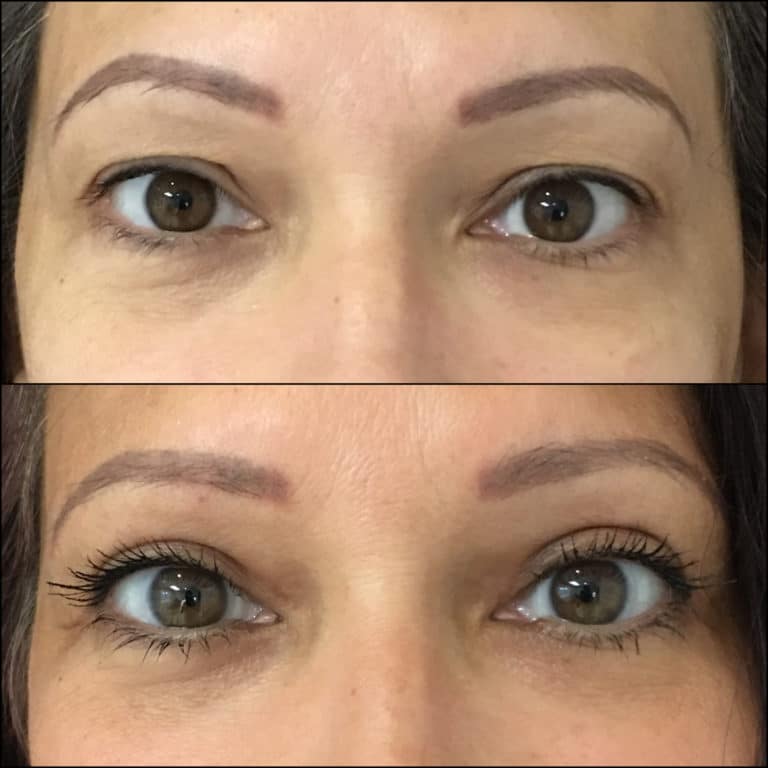
*Real Patient Results - Before & After Upper Blepharoplasty
Why Specialized Training Directly Reduces Surgical Risk
Eyelid surgery complications are uncommon in experienced hands, but they can be serious and difficult to reverse when they do occur, making the surgeon's expertise the single most important variable in reducing risk.
- Retrobulbar hemorrhage: The most serious potential complication of blepharoplasty is post-surgical bleeding behind the eye, which can threaten vision. A trained oculoplastic surgeon knows how to prevent, recognize, and immediately manage this emergency.
- Overcorrection and undercorrection: Removing too much or too little skin can lead to lagophthalmos (inability to fully close the eye), eyelid retraction, a hollow appearance, or persistent hooding that fails to improve the patient's concerns.
- Dry eye and ocular surface damage: Studies note that blepharoplasty's most common complications are ophthalmic, including dry eye and blepharitis, conditions that surgeons without ophthalmology training may not detect preoperatively or manage afterward.
- Undiagnosed ptosis: Failing to identify levator muscle weakness before surgery is one of the leading causes of patient dissatisfaction after blepharoplasty, because removing skin alone cannot correct a drooping eyelid caused by a muscle problem.
A surgeon with Dr. Levin's background screens for each of these risk factors during every consultation, ensuring patients receive the correct diagnosis and the right procedure from the start.
The Difference Between an Oculoplastic Surgeon and a General Plastic Surgeon
Both oculoplastic surgeons and general plastic surgeons can perform blepharoplasty, but their training paths are fundamentally different, and those differences directly affect eyelid surgery outcomes.
- Ophthalmology Foundation: An oculoplastic surgeon is first a board-certified ophthalmologist. This means they understand ocular surface health, tear film dynamics, and intraocular pressure in ways that other surgical specialties do not.
- Fellowship training: After completing ophthalmology residency, oculoplastic surgeons complete an additional one to two years of ASOPRS-approved fellowship training focused exclusively on the eyelids, orbit, tear drainage system, and facial aesthetics.
- Exclusive focus: While a general plastic surgeon divides their expertise across the entire body, an oculoplastic surgeon's entire surgical practice revolves around the eye area. This concentrated focus means more procedures, more pattern recognition, and more refined techniques over time.
- Managing complications: Because oculoplastic surgeons are trained eye physicians first, they can diagnose and treat ophthalmic complications, corneal exposure, dry eye, and tear film instability without needing to refer to another specialist.
Dr. Levin completed her ophthalmology residency at Rutgers NJ Medical School, where she was elected Chief Resident, followed by a neuro-ophthalmology fellowship at Columbia University and an ophthalmic plastic and reconstructive surgery fellowship at the prestigious New York Eye & Ear Infirmary.
Schedule a Consultation With Dr. Flora Levin, MD, FACS
Your surgeon's experience in eyelid surgery matters more than you think because the margin for error around the eyes is razor-thin, and the consequences of getting it wrong can affect both your vision and your appearance for years. Dr. Levin has dedicated her entire career to this one area of the face, backed by fellowship training at the New York Eye & Ear Infirmary, a directorship at Yale, thousands of completed procedures, and the natural-results philosophy that has earned her 4.8 stars across more than 430 Google reviews.
If you're considering eyelid surgery and want a specialist who treats your eyelids with the precision and care they require, contact Dr. Levin's Westport, Connecticut office today at (203) 557-6464 to schedule your consultation.