

Deciding to move forward with ptosis repair is a meaningful step toward clearer vision, a more rested appearance, and renewed confidence. One of the most common questions Dr. Flora Levin hears from patients in Westport, Fairfield, and the surrounding Connecticut area is: What does recovery actually look like? Here is a practical breakdown of what to expect in the days and weeks following surgery.
The First 24 Hours
Rest is the priority immediately after ptosis repair. The procedure is performed on an outpatient basis, so patients return home the same day. Expect some swelling, bruising, and mild discomfort around the eye. Cold compresses applied gently to the area can help manage swelling. It is normal for the eyelid to feel tight or heavy during this window. Someone should drive you home and stay with you for the first night.
Days 2 Through 5
Swelling and bruising typically peak around days two and three before beginning to subside. During this phase, most patients notice:
- Increased puffiness around the eye, which is a normal part of the healing process.
- Some redness or light sensitivity.
- Mild soreness that is manageable with recommended medications.
- Slight asymmetry as the two sides heal at their own pace.
Keeping the head elevated, even during sleep, helps reduce fluid buildup. Most patients feel comfortable resting at home during this period and are not yet presentable for public activities.
Days 6 Through 14
Bruising fades noticeably during the second week, and swelling continues to improve. Patients who had external ptosis repair will have sutures along the natural eyelid crease; Dr. Levin will advise on the timing of any removal. Those who underwent the internal approach with dissolvable sutures do not need a removal visit. By the end of week two, many patients feel comfortable returning to work or light daily activities, though this varies by individual.
Weeks 3 Through 6
The eyelid continues to settle during this phase. Any residual swelling gradually resolves, and the final eyelid position becomes clearer. Most patients are cleared for more physical activity during this window, though strenuous exercise should be reintroduced only with Dr. Levin's guidance.
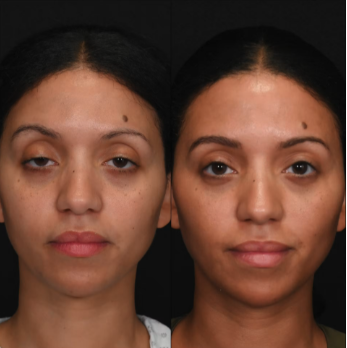
*Real Patient Results - Before and 4 months after external ptosis repair.
Tips for a Smooth Recovery
A few simple habits can make a meaningful difference in how comfortably you heal:
- Keep your head elevated above your heart for the first several days to help minimize swelling.
- Avoid screens for extended periods to reduce eye strain during the early healing phase.
- Wear sun protection once you are cleared to go outside, as the delicate eyelid skin is more sensitive after surgery.
- Avoid blood-thinning medications, supplements, or alcohol unless Dr. Levin has specifically cleared them.
- Attend all follow-up appointments so your progress can be monitored and any questions addressed promptly.
When Will I See My Final Results?
Full healing after ptosis repair takes several months. Subtle improvements in eyelid position and symmetry continue as residual swelling resolves and tissues fully stabilize. Most patients see their final outcome between three and six months post-procedure.
Questions About Ptosis Repair? Dr. Levin Is Here to Help.
As a board-certified oculofacial plastic surgeon and eyelid specialist, Dr. Flora Levin brings over a decade of experience to every ptosis repair she performs in her Westport, CT office. Her surgical approach is precise, personalized, and focused on natural, lasting results.
If you are considering ptosis repair or have questions about recovery, schedule a consultation with Dr. Levin today.