
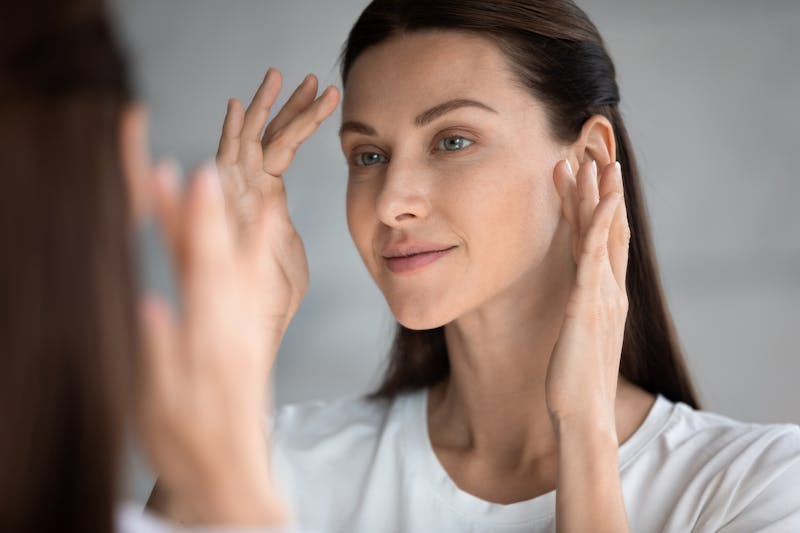
The skin around the eyes is the thinnest, most delicate skin on the entire face, and it's often the first place to show signs of aging. The good news is that a few consistent, everyday habits can meaningfully slow down the process. Board-certified oculofacial plastic surgeon Flora Levin, MD, FACS, specializes exclusively in the eyelids and surrounding structures, and she regularly counsels patients on how small changes in their daily routines can protect the eye area for years to come.
In this blog, we'll discuss why the eye area ages differently, how sun protection plays a central role, which skincare ingredients matter most, how sleep and lifestyle habits affect the periorbital skin, and when professional treatments can complement your at-home routine.
Why the Eye Area Ages Faster Than the Rest of the Face
The periorbital region is uniquely vulnerable to aging because of its anatomy. The skin around the eyes is roughly 0.5 millimeters thick, significantly thinner than the skin on the rest of the face, and it contains fewer oil glands and less subcutaneous fat. This makes it more susceptible to dehydration, fine lines, and loss of elasticity.
Add in constant movement from blinking (up to 20,000 times a day), squinting, and facial expressions, and the eye area endures more mechanical stress than nearly any other part of the body. Understanding why this area ages differently is the first step toward protecting it effectively.
Sun Protection Is the Single Most Important Habit
No skincare product, treatment, or habit will do more for the eye area than consistent UV protection. A landmark randomized trial demonstrated that daily sunscreen use resulted in 24% less skin aging compared to occasional use over a 4.5-year period. UV radiation breaks down collagen and elastin, the structural proteins that keep skin firm and resilient, and the thin periorbital skin is especially vulnerable to this damage.
- Daily SPF: Apply a broad-spectrum sunscreen of at least SPF 30 every morning, including the skin around and beneath the eyes.
- Sunglasses: UV-blocking sunglasses protect the eyelids and surrounding skin from direct sun exposure while also reducing the squinting that contributes to crow's feet.
- Wide-brimmed hats: A hat adds an extra layer of defense during prolonged outdoor time, particularly during peak UV hours between 10 a.m. and 4 p.m.
- Year-round commitment: UV rays penetrate clouds and reflect off surfaces like water and snow, making daily protection essential regardless of season or weather.
Dr. Flora Levin, MD, FACS, consistently emphasizes sun protection as the foundation of any anti-aging strategy for the eye area.
Targeted Skincare Ingredients for the Periorbital Area
Not every skincare ingredient is appropriate for the delicate eye area, but a few evidence-based actives can make a noticeable difference when used consistently. A review of topical cosmeceuticals for periorbital rejuvenation highlights several ingredients with demonstrated benefits for this specific region.
- Retinoids: Vitamin A derivatives stimulate collagen production and accelerate cell turnover, helping reduce fine lines and improve skin texture over time. Start with a low concentration to avoid irritation around the eyes.
- Vitamin C: A potent antioxidant that neutralizes free radicals generated by UV exposure and supports collagen synthesis for firmer, more even-toned skin.
- Hyaluronic acid: This naturally occurring molecule binds up to 1,000 times its weight in water, making it an excellent hydrator for the thin, moisture-deprived periorbital skin.
- Peptides: Signal peptides can help stimulate collagen and elastin production, contributing to improved firmness and reduced fine line depth around the eyes.
Dr. Levin's team can help identify the right combination of ingredients for your individual skin type and concerns.
Sleep and Lifestyle Habits That Affect the Eye Area
What you do outside of your skincare routine matters just as much for the periorbital region. Research from the Aesthetic Surgery Journal has shown that sleep position can contribute to facial wrinkles over time, as repeated compression against a pillow causes the skin to fold and crease. Studies on periorbital aging have also identified smoking as a significant risk factor for wrinkling around the eyes.
Sleeping on your back, when possible, reduces nightly compression on the eye area. Staying well-hydrated supports skin elasticity from the inside out, and avoiding smoking eliminates one of the most damaging accelerators of periorbital aging. Managing screen time and taking breaks from close-up focus can also reduce habitual squinting that deepens crow's feet over time.
When to Consider Professional Treatments
Even the best at-home habits have limits. When fine lines, volume loss, or skin laxity around the eyes progress beyond what topical products can address, professional treatments can provide a meaningful boost, and knowing when to explore them is part of a smart long-term strategy.
- BOTOX and neuromodulators: Relaxing the muscles that cause crow's feet and forehead lines can prevent dynamic wrinkles from becoming permanently etched into the skin.
- Dermal fillers: Strategically placed filler can restore lost volume in the tear trough and under-eye area, reducing hollowness and shadows.
- Laser resurfacing: CO2 and fractional laser treatments stimulate deep collagen remodeling, improving texture, tone, and fine lines around the eyes.
- Upper blepharoplasty: When excess skin begins to hood the upper eyelids, surgical correction by a specialist like Dr. Levin can restore a refreshed, more open appearance that no cream or serum can replicate.
Keep Your Eyes Looking Their Best
Simple daily habits, from wearing sunscreen to choosing the right eye cream, lay the groundwork for a younger-looking eye area, and knowing when professional treatments can help takes your results even further. As a board-certified oculofacial plastic surgeon with fellowship training from the New York Eye & Ear Infirmary, a former directorship at Yale, and ASOPRS membership, Dr. Levin brings an unmatched depth of expertise to both preventative and corrective care for the eye area.
Whether you're looking to refine your skincare routine or explore surgical and nonsurgical options, contact her Westport, Connecticut office today at (203) 557-6464 to schedule your consultation.